
Worn teeth: causes and treatments for dental erosion
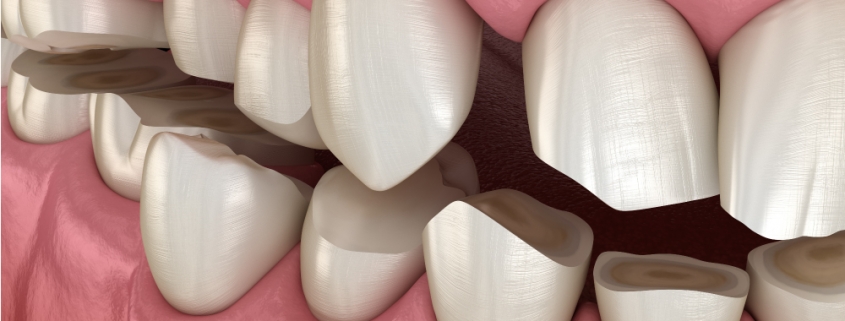
worn teeth – Studio dentistico Motta Jones, Rossi & Associati
Worn teeth usually have lost a certain amount of enamel as a result of a deterioration process. Today, as cosmetic dentistry has become an established trend, people affected by this problem are increasingly attentive to finding effective solutions. In addition to causing aesthetic concerns, this condition may be a warning sign of other disorders that should be addressed promptly. Certain acidic substances in the mouth, for example, attack the outer surface of the teeth, causing lesions. People who suffer from frequent vomiting or gastroesophageal reflux may be prone to dental erosion due to hydrochloric acid travelling from the stomach into the mouth. Understanding the origin of dental erosion and knowing why teeth wear down can help prevent the problem.
CONTENTS
- Symptoms of worn teeth
- The main causes of worn teeth: bruxism and abfraction
- Worn teeth: what can be done? Dental reconstruction
- How to prevent tooth wear
- FAQ
1. Symptoms of worn teeth ⇧
The symptoms and appearance of worn teeth are usually easy to recognise. Some clear signs of dental erosion include:
- yellow and short-looking teeth;
- transparent tooth enamel, especially along the edges. In some cases, the teeth may appear almost glass-like. When this symptom is present, the tooth may be more vulnerable to fractures or chipping;
- increased tooth sensitivity to hot and cold stimuli;
- pain caused by exposure of the dental pulp.
2. The main causes of worn teeth: bruxism and abfraction ⇧
Tooth wear up to a certain level is a physiological process and is related to ageing and the natural ageing of the individual. The most common mechanical causes of tooth wear include:
- bruxism, which causes teeth grinding;
- rubbing of other materials against the tooth surface and overly aggressive brushing;
- the use of abrasive whitening toothpastes;
- abfraction, namely the loss of enamel caused by flexural forces at the cervical area of the tooth due to grinding.
Erosion and abrasion are not the same thing. Erosion refers to the wearing away of the tooth across its entire surface, whereas dental abrasion affects only the part of the tooth involved in chewing.
In this video, Dr Hiroki Moriguchi explains the main causes of dental erosion and illustrates the advantages of the 3 Step Technique.
3. Worn teeth: what can be done? Dental reconstruction ⇧
When tooth wear is detected early, it is possible to proceed with composite restorations or dental veneers. These are an ideal solution, particularly for addressing hypersensitivity and aesthetic concerns. In the presence of worn teeth, the dentists at our Milan dental practice assess the most suitable therapeutic approach. In some cases, it may be necessary to:
- adjust the diet,
- improve brushing technique,
- proceed with the placement of dental prostheses,
- proceed with the placement of ceramic dental veneers,
- place crowns on teeth severely damaged by erosion.
In the past, placing a crown on a tooth required root canal treatment and extensive filing in order to protect it with thick dental crowns. Today, dentists can rely on innovative new materials such as lithium disilicate, which make it possible to create thin, resistant crowns after only minimal tooth preparation.
Innovative techniques to protect and rebuild teeth
The technique of extensive filing and root canal treatment is increasingly considered outdated by modern dentists. At our practice, we offer patients the opportunity to benefit from the 3 Step Technique. This innovative technique is fully additive and allows the worn portion of the teeth to be replaced with composite material in just a few appointments.
In cases of abrasion caused by bruxism, a customised protective mouthguard is also made to be worn at night. This helps protect the teeth from further erosion.
4. How to prevent tooth wear ⇧
Prevention is the most effective tool against dental erosion and tooth wear. Protecting the enamel means preserving both the function and appearance of the smile over time, avoiding more complex treatments when the damage has already progressed. One of the most important preventive measures is the use of a customised night guard in patients who suffer from bruxism. This protective appliance reduces the forces generated by grinding and limits the progressive wear of the tooth surfaces during sleep.
Diet also plays a key role. Frequent consumption of fizzy drinks, fruit juices, citrus fruits and other highly acidic foods can encourage enamel demineralisation. Following a balanced diet, limiting acidic substances and choosing foods that support oral health can help keep teeth more resistant to wear.
Another good habit is adopting correct oral hygiene techniques. It is advisable to use a soft-bristled toothbrush or an electric toothbrush, avoiding overly forceful movements that may contribute to enamel abrasion and gum recession. After consuming acidic foods or drinks, it is also preferable to wait about 30 minutes before brushing the teeth, so as not to further damage a temporarily weakened surface.
Do not forget your dental appointment!
The presence of saliva in the mouth helps maintain balance against acids and counteracts bacterial proliferation. To prevent tooth enamel erosion, the dentist also checks that the patient has an adequate amount of saliva in the oral cavity. Regular dental check-ups make it possible to detect both a predisposition to the problem and the early signs of tooth wear, as well as to intervene with minimally invasive treatments. In the management of dental erosion, timing is crucial. The earlier the problem is identified, the simpler, more conservative and more effective the solutions needed to preserve the natural teeth will be.
5. FAQ about worn teeth and dental erosion⇧
Q. What should you do when your teeth are worn down?
A. When tooth enamel is worn down, it is important to book a dental appointment as soon as possible. The dentist will assess the extent of the wear, identify its causes and recommend the most appropriate treatment.
Q. How can you tell if your tooth enamel is wearing away?
A. Some signs may indicate progressive enamel wear, such as shorter or flatter teeth, increased sensitivity to hot and cold, transparent incisal edges, yellowing of the teeth and the appearance of small chips.
Q. Can worn teeth be rebuilt?
A. Yes, in most cases it is possible to restore shape, function and aesthetics. Depending on the level of wear, the dentist may use composite restorations, dental veneers or crowns. Modern adhesive techniques make it possible to preserve more healthy tooth structure than in the past.
Q. Can bruxism cause tooth wear?
A. Yes. Bruxism, or involuntary teeth grinding, is one of the main causes of dental wear. Continuous friction between the dental arches can progressively wear down the enamel, cause tooth sensitivity and increase the risk of chips and fractures.