
Dental sealants for adults: when to get them and how long they last
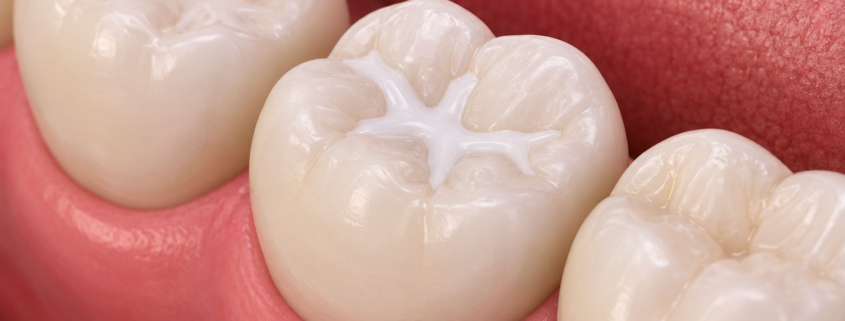
Dental sealants are a preventive treatment that involves applying a fluid material, generally resin-based, to the grooves and pits on the chewing surfaces of molars and premolars. Once hardened, the sealant creates a barrier that limits the accumulation of plaque, food debris and bacteria in areas that are more difficult to reach with a toothbrush. Although this treatment is often associated with children, it can also be useful for adults when certain anatomical or clinical conditions increase the risk of tooth decay. It is not a filling and, when performed for preventive purposes, does not involve the removal of healthy dental tissue. Below, we will examine the situations in which the dentists at our dental practice in Milan recommend it for adult patients.
CONTENTS
- Dental sealants for adults
- When dental sealants are recommended
- Dental sealants: pros and cons
- Personalised assessment for adults
- FAQ
1. Dental sealants for adults ⇧
Dental sealants protect an intact tooth surface or, in selected cases, can help control an early non-cavitated lesion, always following an accurate diagnosis. Age is therefore not the only criterion: the decision must take into account the individual tooth, the patient’s history of tooth decay, oral hygiene, salivary flow and habits. Clinical indications also include the permanent teeth of adults who are at greater risk of developing tooth decay.
The most common cases
The available scientific evidence is more extensive for children and adolescents, but in adults the indication can be assessed on the basis of dental anatomy and individual risk. Changes in diet, medications that reduce salivary flow, difficulties with oral hygiene, orthodontic appliances or general health conditions can alter the balance of the oral environment. In these circumstances, sealants can form part of a broader preventive programme, together with regular professional cleaning appointments and fluoride products. In adults, the most common situation involves patients with healthy molars characterised by deep fissures and a moderate or high risk of tooth decay. This type of treatment can also be considered for an early occlusal lesion without cavitation. If the sealant adheres properly and remains intact, it isolates the area and can help prevent the lesion from progressing. However, when a cavity is present, involvement of the dentin is significant or reliable monitoring is not possible, a filling may be necessary. Clinical diagnosis, possibly supplemented by X-rays, remains essential.
2. When dental sealants are recommended ⇧
Dental sealants are considered primarily when molars or premolars have deep, narrow grooves that are difficult for toothbrush bristles to reach. Before proceeding, the dentist examines the morphology of the tooth, rules out the presence of cavities and assesses the patient’s overall risk of tooth decay. At our dental practice, we sometimes recommend sealants in the presence of:
- recent previous cavities or numerous fillings;
- pronounced occlusal grooves that are difficult to clean;
- reduced salivary flow, including as a result of medication;
- frequent consumption of sugary foods or drinks;
- manual dexterity difficulties that make toothbrushing less effective;
- early non-cavitated lesions diagnosed and monitored by the dentist.
The treatment acts only on the surface that is covered and does not replace fluoride toothpaste, professional dental cleaning, regular check-ups or interdental cleaning. It should therefore be included as part of a broader preventive programme, tailored to the characteristics of the patient’s mouth and individual habits. A personal history of tooth decay is one of the most important factors when assessing future risk.
3. Dental sealants: pros and cons ⇧
It is important to consider both the preventive benefits and the limitations of the procedure. The main benefit of dental sealants is the protection of anatomically vulnerable areas without sacrificing healthy enamel. Application is quick, conservative and normally does not require anaesthesia. The main advantages include:
- reduced risk of tooth decay in the treated grooves;
- preservation of the tooth’s natural structure;
- the possibility of intervening before a filling becomes necessary;
- treatment that can be performed during a routine appointment;
- the possibility of repairing or adding to the material.
The limitations depend primarily on appropriate case selection and maintenance. Dental sealants are sensitive to moisture during application and contamination with saliva can compromise adhesion. The material can also wear down or partially detach as a result of chewing and must be checked during regular dental visits. A sealant that is no longer intact may lose some of its protective function and require repair or reapplication. The quality of tooth isolation, surface preparation and light curing all influence the stability of the result.
Dental sealants: contraindications and limitations
Dental sealants are generally avoided or postponed when:
- the grooves are shallow, easy to clean and the risk of tooth decay is low;
- there is an obvious cavity requiring restorative treatment;
- there is interdental tooth decay or other problems requiring different treatment;
- the treatment area cannot be kept sufficiently dry;
- extensive restorations or other conditions make the sealant of little benefit.
A sealant applied over a lesion that has not been correctly diagnosed can delay appropriate treatment. Even after treatment, patients must continue to use a toothbrush, fluoride toothpaste and interdental cleaning tools. The sealant protects the area to which it is applied, but does not prevent tooth decay from developing on the side surfaces of the teeth, between teeth or near the gum line.
4. Personalised assessment for adults ⇧
Dental sealants for adults are a practical preventive option, but they should only be recommended following an individual assessment. The greatest benefit is achieved when vulnerable grooves are present and there is a documented risk of tooth decay.
At our dental practice, every recommendation is made as part of a preventive care programme that takes into account dental and periodontal health, habits, existing restorations and the need for ongoing monitoring. A dental examination can determine whether dental sealants are appropriate or whether other preventive or therapeutic measures would be preferable.
5. FAQ ⇧
Q. How long do dental sealants last?
A. Dental sealants can last for several years. However, the material is subjected to the pressure of chewing and may wear down or lose small portions over time. During check-ups, the dentist checks the condition of the sealant and, when necessary, repairs or replaces it. Its actual lifespan depends on the quality of the application, the material used and proper maintenance.
Q. Are dental sealants painful?
A. No, dental sealants are not normally painful. The procedure involves the outer surface of the enamel and, when performed for preventive purposes, does not require drilling or anaesthesia. The patient may only feel the contact of the instruments or a slight sensation of bulk immediately after application. If the material interferes with the way the teeth come together, the dentist can quickly adjust it.
Q. What are the steps involved in applying dental sealants?
A. The procedure generally involves cleaning the tooth, isolating it from saliva and treating the surface with an etching gel. After rinsing and drying, the material is applied to the grooves and hardened with a curing light. Finally, the dentist checks the coverage, adhesion and occlusion.