
ENDODONTIC TREATMENTS
The endodontium is the cavity inside the tooth, consisting of the dental pulp and the root canal. Endodontics is a branch of dentistry that deals with the diagnosis and therapeutic treatments of issues related to the endodontium.
The Motta Jones, Rossi, and Associates dental clinic, located in Milan in the Cadorna-Magenta area, performs endodontic treatments aimed at treating teeth damaged by cavities or trauma. Endodontics involves minimally invasive outpatient dental procedures.
Endodontic treatment becomes necessary in clinical situations where the dental pulp (the soft inner tissue) is inflamed.
The causes of a dental pulp infection (also known as the tooth nerve), which require endodontic intervention, are often due to:
- A deep and advanced-stage dental cavity;
- The outcome of an inadequate dental treatment;
- Various types of trauma that cause tooth fractures.
DAMAGED DENTAL PULP
The dental pulp is a soft tissue composed of arteries, veins, nerve endings, and connective cells.
The dental pulp has two different functions depending on the patient’s age:
- In a developing patient, the dental pulp is responsible for forming the calcified supporting structure of the tooth (known as dentin). Over time, it gradually thins.
- In an adult patient, the dental pulp is thinner and serves less primary functions, such as perception and sensitivity to cold, as well as dentin hydration.
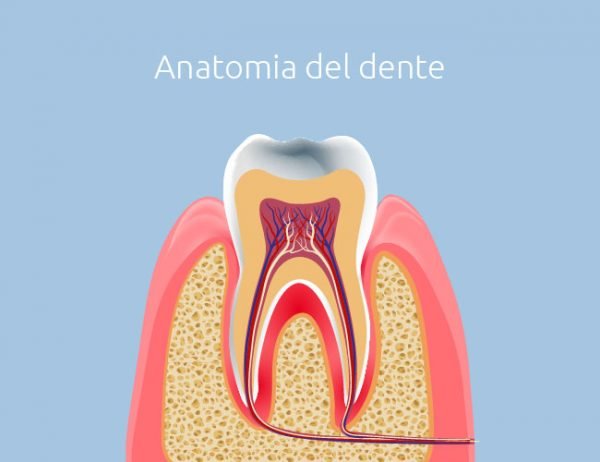
An untreated dental cavity causes the decalcification and progressive destruction of the tooth’s hard tissues. The action of microorganisms present in bacterial plaque enlarges the cavity created by the decay until the infection reaches the pulp, leading to necrosis and eventual tooth loss.
The consequences are severe, as the damaged dental pulp causes acute, painful, and often chronic effects on the surrounding tissues.
In this clinical situation, the dentists collaborating with the Motta, Jones, Rossi, and Associates dental clinic recommend endodontic treatment.
Endodontic treatment (also known as root canal therapy) is a procedure that allows us to preserve the damaged tooth, avoiding extraction and opting for the devitalization process instead.
ENDODONTIC DISORDERS
TREATMENTS AND CARE
Recent Posts
 Severe gingival recession: causes, symptoms and treatment5 October 2026 - 15:49
 Cosmetic Dentistry and the evolution of aesthetics in international dentistry30 September 2026 - 16:58
 Gum infection: what should you do?11 September 2026 - 16:23
 Dental sealants for adults: when to get them and how long they last12 August 2026 - 18:47