
Earache and wisdom tooth: here‘s how they’re connected
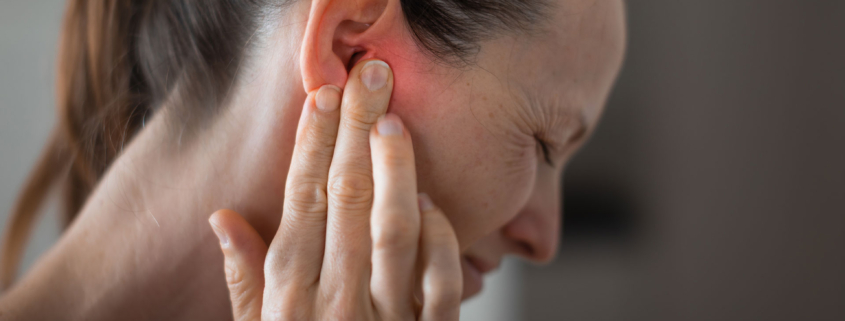
When your ear hurts, what could be the cause? Earache is commonly associated with ENT issues such as otitis, earwax buildup, or bacterial infections, but in many cases, the root cause may not lie directly within the ear. In fact, there is a direct connection between the oral cavity and the ear area. This is due to the complex network of nerves and muscles involving the teeth, temporomandibular joint, and cranial nerves. When one of these elements becomes inflamed or traumatized, the pain can radiate to the ear, causing significant discomfort.
INDEX
- Toothache and ear pain: the correlation
- Why do my ear and jaw hurt?
- Earache and wisdom tooth
- When to consult a specialized dental clinic
1. Toothache and ear pain: the correlation ⇧
Why do my tooth and ear hurt? Teeth and ears share some nerve pathways, particularly through the trigeminal nerve. A dental inflammation can therefore cause referred ear pain. Among the most common dental issues that lead to earache are:
- untreated dental infections, such as abscesses and granulomas;
- deep cavities reaching the dental pulp;
- bruxism (teeth grinding), especially at night;
- advanced gingivitis and periodontitis;
- problematic eruption of wisdom teeth.
These conditions may cause pain perceived in a location different from the origin. Earache can therefore be a symptom of an underlying dental problem. It is essential to consult a competent dental clinic for an accurate diagnosis and to define a targeted treatment plan that resolves the root cause.
2. Why do my ear and jaw hurt? ⇧
A TMJ dysfunction or an inflamed wisdom tooth are among the main combined causes. The temporomandibular joint (TMJ) is a complex structure located near the ear, allowing jaw movement during chewing, speaking, and swallowing. When affected by stress, trauma, dental malocclusions, or bruxism, it can cause a painful syndrome involving both the jaw and ear area. For many patients, ear pain is one of the main indicators of TMJ dysfunctions, often accompanied by sensations of “blocked ear,” ringing, or even dizziness. TMJ disorders (TMD) present with:
- pain or stiffness when opening the mouth,
- tension or soreness in the masticatory muscles,
- joint noises, such as clicks or pops,
- recurrent earaches without visible infections.
People who tend to clench or grind their teeth during sleep or in stressful situations are more likely to develop these disorders. An effective treatment often requires a multidisciplinary approach, including custom bite guards, relaxation techniques, and in severe cases, surgical therapies.
3. Earache and wisdom tooth ⇧
Can a wisdom tooth cause ear pain? Yes, among dental causes of earache, one of the most frequent but often underestimated is the third molar. It usually erupts between the ages of 17 and 25 and can grow abnormally or remain partially impacted in the gum, causing various discomforts. Pain from an erupting or misaligned wisdom tooth can radiate to the ears, temples, and even the throat, complicating diagnosis. Key symptoms not to ignore include pain in the back of the jaw, gum swelling or localized inflammation, fever or swollen lymph nodes, and difficulty fully opening the mouth (trismus). Moreover, the wisdom tooth can also trigger the annoying condition known as tinnitus.
Where does wisdom tooth pain radiate?
Discomfort may affect the jaw, ear, throat, shoulder, and in some cases even the head. Radiated pain can result from inflammation of surrounding soft tissues (pericoronitis) or pressure from the tooth on the mandibular nerve. A panoramic X-ray or CT scan can confirm the diagnosis. In many cases, extracting the tooth is the only effective solution to eliminate symptoms and prevent further complications, including infections.
4. When to consult a specialized dental clinic ⇧
At our dental clinic in Milan, we use advanced technologies and up-to-date protocols to provide effective and minimally invasive care for both adults and children. Often, earache appears subtly and persistently, with no apparent cause within the ear itself. In such cases, it is advisable to book a specialist visit with our experienced dental professionals. The first visit includes:
- clinical examination of the oral cavity and the temporomandibular joint;
- digital X-rays and 3D CT scans, if necessary;
- occlusal assessment to detect malocclusions or teeth clenching;
- personalized treatment plan and continuous support.