
What are dental veneers and what does getting them involve?
Who doesn’t dream of having a perfect smile? Dental veneers are one of the most advanced and popular solutions in cosmetic dentistry. They consist of thin ceramic or porcelain shells, custom-made and applied to the front surface of the teeth to correct imperfections and significantly enhance the appearance of the smile. This treatment addresses issues such as yellowed, chipped, or slightly misaligned teeth, while also helping to strengthen the underlying dental structure, providing a natural-looking and long-lasting result.
INDEX
- Types of dental veneers
- When and why apply dental veneers?
- What does getting dental veneers involve?
- Dental veneer application: step-by-step procedure
- How long do dental veneers last?
- When are dental veneers not recommended?
- Dental veneers: patient testimonials
1. Types of dental veneers ⇧
At our dental practice, we offer patients two different types of veneers, approximately 0.5 mm thick:
- Indirect veneers, made primarily of ceramic, are the most requested due to their superior aesthetics and long-lasting durability and functionality. They are handcrafted by highly skilled dental technicians;
- Direct veneers, made of composite materials applied directly to the tooth surface. These offer slightly lower aesthetic results compared to ceramic ones and are generally less durable.
When we talk about “ceramic”, we refer to various types of glass-like materials. The strength of these veneers depends on the amount of crystals used to reinforce them. However, it’s important to note that a higher crystal concentration reduces the transparency and natural appearance of the veneers.
2. When and why apply dental veneers? ⇧
This minimally invasive treatment is ideal for those seeking a significant aesthetic improvement without complex or lengthy procedures. Thanks to their composition, veneers look extremely natural, are resistant to staining and wear, and provide a long-lasting brightness and harmony to the smile. They are primarily recommended to address a range of common aesthetic issues that can negatively impact self-confidence and the perception of one’s smile, including:
- deep and persistent stains that cannot be removed with teeth whitening treatments;
- chipped, worn, or broken teeth due to accidents or natural wear;
- presence of excess spacing between teeth (diastemas);
- teeth with irregular shapes or sizes that compromise the aesthetic harmony of the smile.
Dental veneers and crooked teeth
One of the increasingly requested applications for these devices is the treatment of misaligned teeth. In such cases, veneers can offer an immediate and less invasive aesthetic solution compared to traditional orthodontic appliances. However, it is important to note that veneers are mainly recommended to correct minor irregularities and imperfections.
When teeth have significant orthodontic issues, such as major crowding or severe misalignment, it is preferable to start with a specific orthodontic treatment to achieve proper alignment. Veneers can then be used to further refine the aesthetic appearance of the teeth, resulting in a flawless and harmonious smile. This combined approach delivers excellent results, both functionally and aesthetically.
3. What does getting dental veneers involve? ⇧
Before undergoing treatment, it is important to consider a few essential aspects. First, the procedure is irreversible, and to ensure optimal adhesion of the veneers, it requires the removal of a thin layer of enamel, which cannot regenerate naturally. This means that once applied, veneers will need to be maintained or replaced over time. Practically speaking, the procedure is painless and well-tolerated, as it is performed under local anesthesia and does not require extended recovery time. After treatment, the patient may experience slight sensitivity to hot or cold foods, but this is a temporary condition that usually resolves within a few days. Additionally, to maintain long-term results, it is important to adopt good daily oral hygiene, attend regular dental checkups, and avoid biting hard objects.
4. Dental veneer application: step-by-step procedure ⇧
The veneer application process involves several important steps, each contributing to the success of the treatment. It begins with a thorough dental evaluation. The dentist carefully examines the patient’s oral health, as certain conditions such as active gum disease or severe bruxism may make veneers unsuitable. These situations may require preliminary treatments or alternative solutions to best protect the patient’s oral health. The procedure includes:
- tooth preparation, with minimal enamel removal to allow for proper veneer placement;
- taking precise dental impressions to be sent to the lab for the creation of custom-made veneers tailored to the patient’s teeth;
- temporary placement of provisional veneers to protect the teeth while the permanent ones are being crafted;
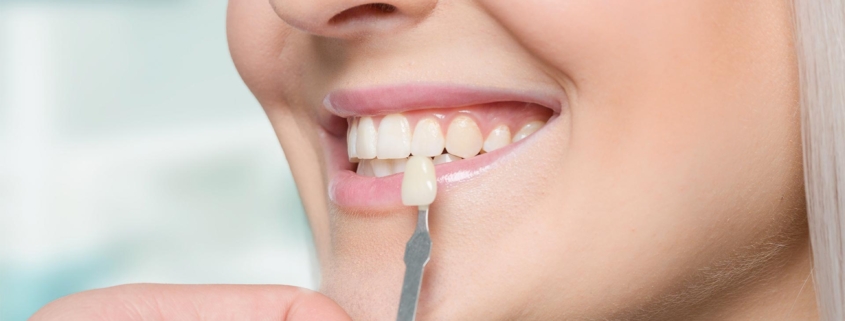
- aesthetic try-in of the final veneers, during which the dentist and patient assess shape, color, and fit before final bonding;
- final bonding of the veneers using special adhesives that ensure stability, strength, and long-term durability.
This procedure, generally free of complications, requires only a few sessions and a short adaptation period, providing the patient with immediate and exceptional aesthetic results.
5. How long do dental veneers last? ⇧
A common question from patients is how long dental veneers last. Their lifespan typically ranges between 10 and 15 years. Longevity depends heavily on maintaining good hygiene practices and adopting eating and behavioral habits that avoid excessive stress on the veneers. Avoiding the biting of hard objects, excessively crunchy foods, or teeth grinding, for example, helps preserve the achieved aesthetic results for longer.
6. When are dental veneers not recommended? ⇧
In some cases, veneers may be discouraged or not be the most suitable choice. This applies, for example, to people who suffer from severe bruxism, or involuntary teeth grinding, as constant pressure and wear can compromise the integrity of the veneers over time. Individuals with serious periodontal problems, such as chronic gum inflammation or bone loss, may also not be ideal candidates. The presence of deep cavities, severely damaged enamel, or excessively fragile tooth structure can affect the adhesion and durability of veneers. Finally, patients unwilling to adopt diligent daily oral hygiene or undergo regular checkups may not benefit fully from the treatment.
7. Dental veneers: patient testimonials ⇧
Many patients who have chosen this treatment report extremely positive experiences, highlighting how this solution has greatly improved their quality of life and confidence in their smile. According to Dr. Rossi from the Motta Jones Rossi & Associati Dental Clinic in Milan, veneers represent “one of the most effective and quickest solutions to achieve a natural and attractive smile, with minimally invasive procedures and outstanding results.” Dr. Motta Jones adds: “Dental veneers are an excellent solution because they allow for minimally invasive interventions and immediate, natural, and long-lasting results. Many patients regain confidence and personal satisfaction thanks to this fast and safe aesthetic treatment.”