
Tooth decay. Symptoms, complications, and treatment
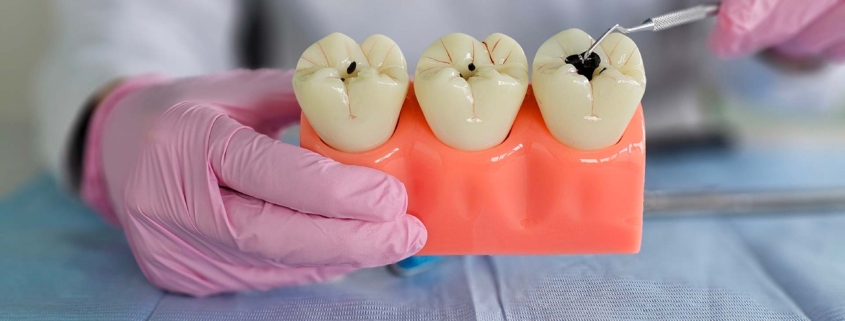
Dental caries are among the most widespread diseases worldwide and, if left untreated, can seriously compromise both oral and general health. According to the Italian National Institute of Health, tooth decay is one of the most common chronic degenerative diseases affecting both children and adults. It affects the hard tissues of the tooth (enamel and dentin) and develops through the action of bacteria present in dental plaque. In the early stages, the condition is often asymptomatic and may not cause pain. Early diagnosis of dental caries is essential to prevent more serious complications. Prompt intervention allows for less invasive and more conservative treatments.
TABLE OF CONTENTS
- How to recognize a decayed tooth: warning signs not to ignore
- Causes of dental caries and main risk factors
- How to prevent tooth decay: effective prevention strategies
- How are dental caries treated?
- FAQ
1. How to recognize a decayed tooth: warning signs not to ignore ⇧
One of the most common mistakes is waiting for pain before suspecting dental caries. In reality, the initial symptoms are usually very mild. The most common warning signs include:
- appearance of white, brown, or black spots on the tooth;
- sensitivity to cold or hot temperatures and sweet foods;
- discomfort while chewing;
- persistent bad breath;
- a rough sensation on the tooth surface.
As tooth decay progresses, it may reach the dentin and eventually the dental pulp, causing severe pain and infections. In such cases, the condition is no longer a simple cavity but may lead to complications such as pulpitis or a dental abscess. In addition to paying attention to minor changes and undergoing regular check-ups, technologies such as digital X-rays and intraoral scanners can be used. These tools allow extremely accurate diagnoses, even in areas not visible to the naked eye.
Types of dental caries
There are three main types of dental caries:
- acute, when developed within the 12 months prior to diagnosis;
- chronic, when developed over the previous two years;
- recurrent, when the lesion reappears because it was not adequately treated.
In recent years, there has also been a growing incidence of decay affecting primary teeth, highlighting the importance of prevention during childhood.
2. Causes of dental caries and main risk factors ⇧
Dental caries are not caused by a single factor but by a combination of conditions that promote bacterial proliferation. The main causes include:
- accumulation of bacterial plaque,
- frequent consumption of simple sugars,
- poor oral hygiene,
- reduced saliva production,
- individual predisposition.
Bacteria in the oral cavity metabolize sugars and consequently produce acids capable of demineralizing the enamel. Studies conducted by the FDI World Dental Federation show that frequent consumption of sugary foods and beverages is more harmful than the total amount of sugar consumed daily. Other risk factors include:
- orthodontic appliances that are difficult to clean,
- gastroesophageal reflux disease (which increases oral acidity),
- certain systemic diseases,
- medications that reduce salivary flow.
3. How to prevent tooth decay: effective prevention strategies ⇧
Prevention plays a decisive role in the management of dental caries. Adopting proper daily habits helps significantly reduce the risk of developing carious lesions. Recommended strategies include:
- brushing teeth at least twice a day after main meals using an appropriate toothbrush and fluoride toothpaste;
- enhancing oral hygiene with dental floss or an interdental brush;
- limiting frequent snacking and sugar intake;
- attending regular dental check-ups;
- undergoing professional dental hygiene sessions periodically.
Fluoride plays a key role in strengthening enamel and counteracting demineralization. According to studies published in leading dental journals, regular fluoride use significantly reduces the incidence of dental caries. For patients at higher risk, specific preventive treatments may be recommended, such as:
- dental sealants,
- topical fluoride applications,
- personalized oral health monitoring.
4. How are dental caries treated? ⇧
The treatment process generally involves:
- accurate diagnosis through clinical examination and advanced diagnostic tools;
- removal of decayed tissue using rotary instruments or minimally invasive techniques;
- restoration of the tooth with aesthetic materials such as composite resins;
- possible endodontic treatment if the decay has reached the pulp (root canal treatment);
- follow-up examinations to monitor treatment stability.
Modern technologies allow increasingly conservative procedures, preserving the natural tooth structure. In more advanced cases, prosthetic solutions such as dental crowns may be required. Relying on an experienced dental team ensures a personalized approach focused on maintaining long-term oral health.
How a dental filling is performed
- Preparation. Contrary to what many patients fear, modern cavity treatment is completely painless. Fillings are generally performed under profound local anesthesia. Latest-generation anesthetics are more powerful and act more rapidly. For particularly anxious patients, a topical anesthetic gel or spray may be applied to the mucosa before the injection. In more complex situations, conscious sedation with nitrous oxide may also be considered.
- Rubber dam isolation. This device is essential to ensure the long-term success of the filling.
- Removal of decayed tissue. Carious dentin can be identified by its darker color (gray or yellow-brown), soft consistency, easy removal with dental instruments, opaque appearance, and sometimes unpleasant odor. During this phase, the dentist works to preserve as much healthy tooth structure as possible.
- Cleaning and disinfection. Through irrigation with sterile water, debris is removed and specific disinfectants such as chlorhexidine are used to reduce the residual bacterial load.
- Careful drying of the treated area using compressed air.
What to do after treatment. Maintenance and prevention of recurrence
After treating dental caries, it is essential to adopt correct habits to prevent recurrence. The success of therapy also depends on the patient’s active cooperation. Good practices include maintaining meticulous oral hygiene according to the dentist’s instructions and attending regular follow-up visits. It is also important to avoid unhealthy dietary habits and monitor any early signs of new lesions.
A prompt and informed approach to the management of dental caries is essential to maintain a healthy mouth over time. Investing in prevention and relying on qualified professionals is the best way to avoid complications and ensure long-term oral well-being.
6. FAQ ⇧
Q. How long can you live with a decayed tooth?
A. There is no safe timeframe. Untreated tooth decay tends to worsen progressively, leading to pain, infections, and tooth loss.
Q. How can you tell if a cavity is severe?
A. A cavity is considered severe when it causes spontaneous pain, intense sensitivity, or infection. In such cases, the dental pulp may already be involved.
Q. What can be done to treat dental caries?
A. It is necessary to consult a dentist for proper diagnosis and treatment. Solutions vary depending on the depth of the lesion.
Q. What does the dentist do to treat a cavity?
A. The dentist removes the decayed portion and restores the tooth. If necessary, more complex procedures such as root canal therapy are performed.