
Fixed dental implant: everything you need to know
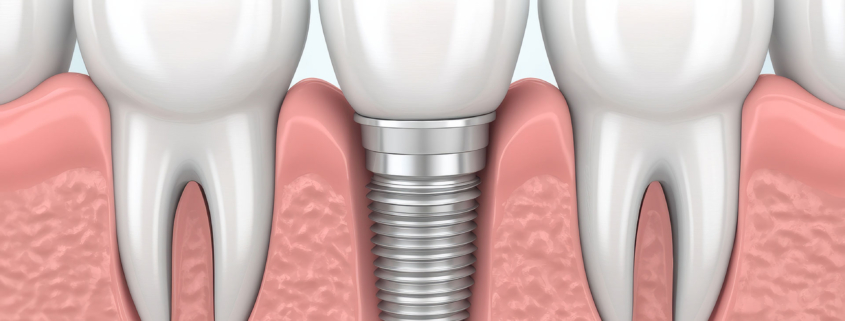
An implant-supported fixed prosthesis is an artificial root, usually made of medical-grade titanium or zirconia, surgically inserted into the maxillary or mandibular bone to permanently replace one or more missing teeth. Many use the term “fixed” to distinguish implants from alternatives such as removable dentures. Thanks to osseointegration, the implant fuses with the bone and supports a natural-looking crown. Our dental practice in Milan offers painless implantology protocols designed for maximum patient comfort.
In today’s article, we would like to share with you the latest studies aimed at offering patients a less invasive and more effective solution for the replacement of missing teeth.
INDEX
- Who we recommend fixed dental implants for
- Balancing function and aesthetics
- How a fixed dental implant is placed
- Pain-free implantology techniques
- What are the risks of a dental implant?
- The latest advances in dental implantology
- Experiments from Tufts University School of Medicine
1. Who we recommend fixed dental implants for ⇧
A fixed dental implant is recommended for those who want a definitive solution compared to removable dentures, for those who do not wish to grind down healthy teeth for traditional bridges, and for those who want to restore chewing function and aesthetics predictably. It is indicated for single, partial, or total edentulism, even in combination with bone regeneration techniques when required. Suitable candidates may also include patients with stabilized periodontitis, bruxism managed with appropriate occlusal protection, and individuals with well-controlled systemic conditions. Heavy smokers, patients with poor oral hygiene, or those with specific medical conditions should be assessed with caution. A clinical examination with 3D imaging will determine whether a fixed dental implant is the safest and most durable option.
2. Balancing function and aesthetics ⇧
The loss of one or more teeth affects not only the smile but also mandibular posture, mastication, and speech. A fixed implant:
- restores chewing efficiency,
- reduces overload on remaining teeth,
- prevents bone resorption or alveolar collapse that may alter facial profile over time,
- improves facial profile and self-esteem.
Switching from long-span bridges or removable dentures to this type of implant improves stability, comfort, and taste perception, ensuring greater confidence in social and professional life. For patients with treated and stabilized periodontitis, it allows the replacement of non-maintainable teeth while preserving gingival architecture and smile harmony. Our clinic adopts a multidisciplinary approach integrating periodontology, prosthodontics, and gnathology. Our aim is to harmonize function and aesthetics, also using digital technologies that simulate outcomes before surgery. Treatment is customized, ranging from a single incisor in the aesthetic zone to full-arch solutions (for example, with 4–6 implants).
3. How a fixed dental implant is placed ⇧
The process begins with medical history, clinical evaluation, photographs, and 3D CT/CBCT scans. Intraoral scans allow virtual planning in which implant position, angulation, and depth respect anatomy, bone quality, and prosthetic design. Frequently, a 3D-printed surgical guide is created for minimally invasive placement. When indicated, flapless surgery is performed, reducing swelling and recovery times.
The importance of examinations during the medical history
X-rays enable the dentist to examine the area where the implant will be placed, analyzing:
- the position of adjacent tooth roots;
- bone density;
- the presence of any anomalies or pathologies.
In particular, computed tomography (CT) provides a detailed three-dimensional view, crucial for precise implant placement. Panoramic X-rays instead provide an overview of the oral cavity.
How teeth are attached to implants
Once osseointegration is complete, an abutment is screwed onto the implant, serving as the connector for the crown. There are two main retention methods: screw-retained and cemented.
- Screw-retained prostheses allow easy removal for maintenance, reducing the risk of cement residue.
- Cemented ones are useful when aesthetics require invisible occlusal holes or when implant angulation is unfavorable.
The crown or prosthetic bar may be made of monolithic zirconia, layered ceramics, or high-performance composites, CAD/CAM-designed for precise fit. The clinician checks screw torque, contacts, and occlusal guidance to distribute loads correctly. A completed implant enables safe chewing and smiling. Regular professional maintenance and home hygiene with dedicated tools (interdental brushes, superfloss) preserve tissues and components over time. If needed, a screw-retained prosthesis can be quickly removed for cleaning or repairs while preserving the implant and peri-implant tissues.
4. Pain-free implantology techniques ⇧
Pain-free implantology uses advanced local anesthesia and, on request, conscious sedation with monitoring. In addition, computer-guided implantology with 3D visualization of the jaw allows for more accurate surgery, precisely displaying implant placement for maximum precision.
The procedure usually lasts from a few minutes to less than an hour per implant. When additional bone volume is needed, regenerative techniques or sinus lifts may be combined. After placement of the fixed dental implant, a temporary crown (immediate loading) may be applied in selected cases with adequate primary stability. Alternatively, osseointegration is awaited (8–12 weeks in the mandible, 3–4 months in the maxilla) before the final prosthesis. The entire workflow is digital:
- impressions without paste,
- CAD modeling,
- milling or 3D printing of the crown to check aesthetics, contacts, and occlusion.
5. What are the risks of a dental implant? ⇧
Complications with fixed implants are uncommon, especially with proper case selection and sterile protocols, but they must be acknowledged. Early risks include site infection, transient pain or swelling, bleeding, or nerve injury. Long-term risks may involve peri-implantitis (inflammation of peri-implant tissues), mobility due to failed integration, prosthetic fracture, or screw loosening. Risk factors include smoking, poor hygiene, uncontrolled diabetes, unmanaged bruxism, and active periodontitis. 3D planning, surgical guides, and pain-free minimally invasive approaches help reduce trauma and complications. It is essential to adhere to professional hygiene recalls and home-care instructions, use night guards in bruxists, and monitor peri-implant health indices. Many conditions are not absolute contraindications; if stabilized, fixed implants may still be placed with dedicated protocols.
How many days of rest after a dental implant?
After implant placement, most patients resume light activities within 24–48 hours. Postoperative discomfort is generally moderate and manageable with prescribed analgesics. Swelling and bruising, if present, subside within a few days. Typical recommendations include a soft diet, intermittent ice packs, avoiding smoking and alcohol for the first 48–72 hours, and careful oral hygiene with dedicated rinses. For sedentary workers, 1–2 days of rest are usually sufficient, while physically demanding jobs may require 2–3 days. Low-impact sports may be resumed after about a week.
Since there is no universal answer, it is crucial to follow the dentist’s instructions given during scheduled follow-ups to check tissue healing and implant stability.
6. The latest advances in dental implantology ⇧
The main innovations in the field include:
- a fully digital workflow (intraoral scans, virtual planning, 3D-printed surgical guides);
- computer-assisted dynamic surgery;
- the use of bioactive implant surfaces that accelerate osseointegration.
Short or narrow implants are increasingly used to reduce grafting in selected cases, zirconia implants for specific aesthetic-biological needs, and advanced regeneration techniques with next-generation biomaterials.
The importance of 3D software
3D software allows dentists to:
- visualize and simulate the final result before placing the implant;
- optimize both functionality and aesthetics of the surgery;
- reduce the margin of error during installation.
Artificial teeth themselves are now fabricated through 3D printing more quickly and precisely, reducing the number of necessary appointments.
7. Experiments from Tufts University School of Medicine ⇧
A recent study conducted by researchers at the Tufts University School of Medicine in the United States presented an innovative technology that could offer an interesting alternative to current dental implants. Traditionally, inserting titanium posts into the jawbone to support a ceramic crown carries the risk of damaging or severing nerve endings in the area. To address this issue, the team developed an implant with a biodegradable coating capable of releasing a blend of stem cells and bioactive proteins during the healing phase. This cocktail stimulates the regeneration of nerve tissues around the implant, restoring the ability to perceive tactile and pressure sensations. Furthermore, the implant’s coating contains microparticles with memory foam-like properties, allowing it to gradually adapt to the alveolar cavity. Initially smaller than the original tooth, the implant expands over time until it optimally occupies the space.